Bobcat Case Study
Case Study

A Bobcat in Need
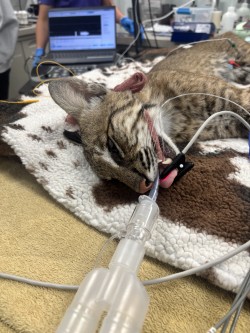
The team at Specialists in Companion Animal Neurology (SCAN) recently had the privilege of assisting the Florida Fish and Wildlife Conservation Commission (FWC) with an important investigation: a wild bobcat suspected of having feline leukomyelopathy (FLM).
A resident of a Southwest Florida community reported the bobcat to FWC after noticing it was having trouble walking. The cat showed weakness and poor coordination in its hind limbs, known medically as paresis and ataxia. Both are hallmark signs of FLM.
What is FLM?
Feline leukomyelopathy is a neurological disorder found in some Florida panthers and bobcats. It causes weakness and incoordination in the hind limbs, making it difficult for affected cats to walk normally.
For a wild animal, loss of mobility can be dangerous. Cats with FLM may struggle to escape predators or move safely across roads. This is a serious concern for the Florida panther, an endangered species with a small remaining population.
FLM was first documented in 2017, and its cause is still unknown. Researchers continue working to better understand this devastating disease.
Why This Case Was So Rare
FLM can currently be confirmed only by examining an animal’s spinal cord after death. As a result, most of what is known about the disease has come from cats that have already died.
Opportunities to evaluate a living animal actively showing signs of FLM are extremely rare. To our knowledge, this bobcat may be the first suspected FLM case to undergo antemortem (before death) diagnostic testing.
What Our Diagnostics Revealed
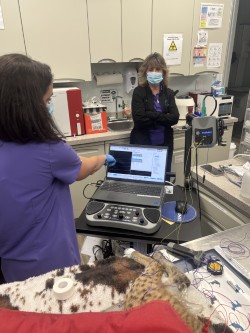
SCAN’s neurology team performed an advanced neurological workup:
MRI (magnetic resonance imaging): Normal. Detailed imaging of the brain and spinal cord showed no structural abnormalities.
Cerebrospinal fluid (CSF) analysis: Normal. The fluid surrounding the brain and spinal cord showed no abnormalities.
Electromyography (EMG) and nerve conduction studies: Abnormal. These tests measure how well nerves and muscles are functioning. The results were not what our team expected.
Normal results can be just as valuable as abnormal ones. They help rule out other structural conditions and show researchers where future imaging should focus, such as diffusion-weighted imaging, an advanced MRI technique that can detect more subtle changes in tissue.
The abnormal EMG and nerve conduction findings were an unexpected discovery, and they raise new questions about how FLM may affect the nervous system.
Why This Case Matters
When studying a disease this rare, every piece of information counts. The findings from this bobcat could help researchers better understand FLM and guide future conservation efforts.
We are honored to partner with FWC in supporting the health of Florida’s iconic wild cats. Every case brings us one step closer to unlocking the mystery of FLM and protecting these remarkable animals for generations to come.
If you see a panther or bobcat that appears to have trouble walking, report it to FWC at MyFWC.com/PantherSightings.